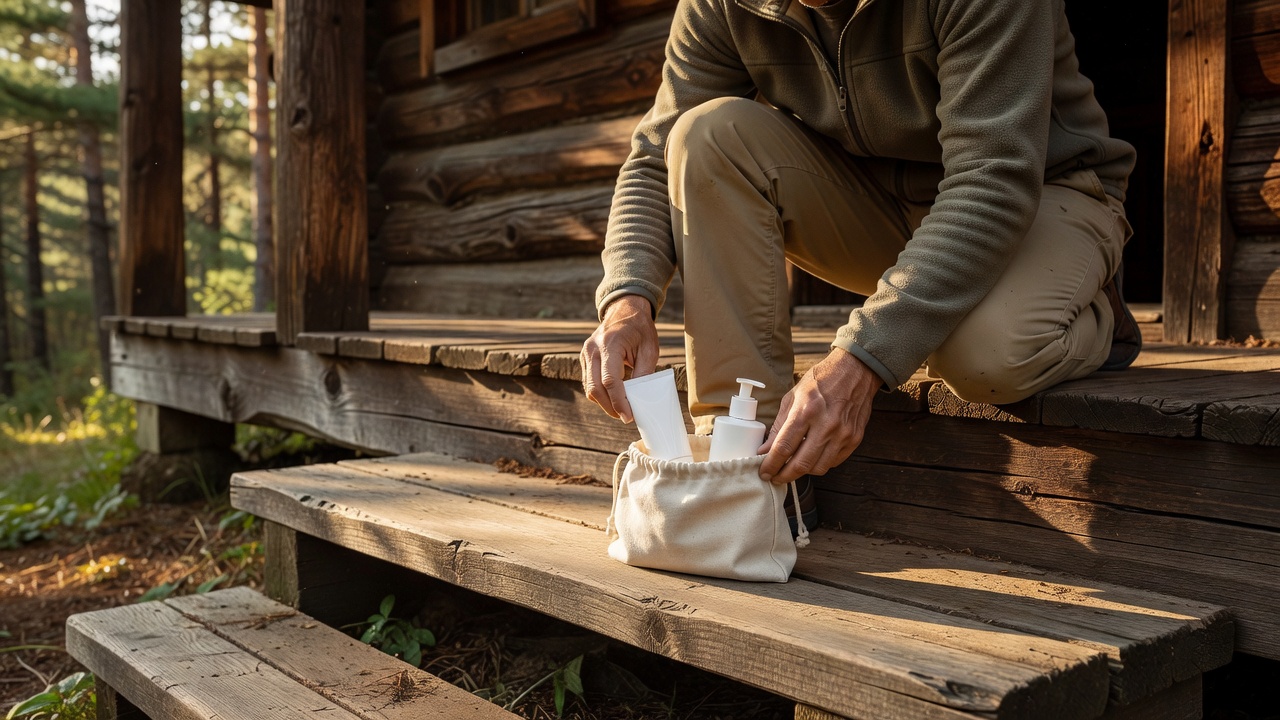
Start with three questions
How long will you be away from your base? Which parts of your skin will be exposed? Where will you wash? A short walk from a cabin may only require accessible sunscreen and lip protection, with cleanser and moisturiser waiting indoors. A multiday route through Hardangervidda needs enough suitable product for repeated use, plus a realistic understanding of washing facilities.
Minimalism is not a competition to carry the least. It means removing duplicates while keeping enough of what matters. Sun protection is a poor place to ration volume. Prescription treatment and items needed for a diagnosed condition are not optional extras simply because they complicate a tidy packing photograph.
The practical packing checklist
- On the move: enough broad-spectrum sunscreen for exposed skin and planned reapplication.
- For lips: a tolerated balm, with suitable SPF protection for daylight exposure.
- For dryness: one familiar moisturiser, carried on the trail only if you need it there.
- At your base: a gentle cleanser and clean drying cloth where washing facilities allow.
- For your own needs: prescribed skin treatments and clear instructions for their use.
- Outside the pouch: hat, sunglasses, gloves and weather-appropriate coverage.
Group these by when you will use them. Put reapplication products beside a snack or navigation pocket rather than at the bottom of a wash bag. Leave evening-only items at your accommodation on a day trip. A routine that is easy to reach is more likely to happen when the weather makes every small task awkward.
Read ingredients by the job they do
Humectants help attract and retain water within a formula and the skin’s outer layers. Glycerin is a common example. Hyaluronic acid is another, but its name alone does not make a product superior. A balanced formula matters more than the prominence of a single ingredient on the front label.
Emollients help soften and smooth rough-feeling skin. Squalane and various fatty ingredients can serve this role. Occlusives, including petrolatum and some silicones, help reduce water loss. These categories overlap in real products. A cream may perform several jobs, so buying three separate products is not automatically more effective than using one you tolerate.
Ceramides are lipids associated with the skin barrier. Some moisturisers include them alongside other ingredients intended to support dry skin. Niacinamide appears in many formulas and may suit some users, but higher concentrations can feel irritating to others. None of these ingredients cancels the effects of harsh cleansing, repeated rubbing or inadequate clothing.
Fragrance and essential oils may add a pleasant sensory experience, but they are not required for skin comfort and can be a problem for sensitive users. “Natural” is not a safety standard. “Hypoallergenic” is not a guarantee of zero reactions. When your skin is easily upset, a short, familiar routine is a more useful starting point than a long list of reassuring marketing words.
Keep sunscreen separate from improvisation
Do not blend sunscreen with moisturiser, oil or foundation to save a step. Its protection depends on using the finished formula as directed. Likewise, avoid replacing sunscreen with an ordinary plant oil or a homemade mixture. Ingredient-level claims do not establish reliable protection for a product assembled in your palm.
Original packaging preserves directions, expiry information and the container chosen for the formula. For sunscreen, a smaller original tube is generally preferable to an unlabelled decant. If you transfer other suitable products, use clean, compatible containers and label their contents. Never use food or drink containers that could cause confusion. Check for leaks before the pouch goes near spare clothing.
Store for the actual journey
Follow each product’s storage directions and avoid leaving the bag in strong heat, such as a sunlit car. Do not assume freezing is harmless either. A changed smell, unusual separation or damaged packaging is a reason to check manufacturer advice rather than trusting appearance alone. Keep lids clean and replace them promptly, especially when wind is carrying grit.
Test the complete routine before departure, including how products feel together beneath a buff or hat. Introduce changes one at a time and allow time to notice irritation. An at-home small-area trial can reveal some problems, but it cannot rule out allergy or replace professional patch testing when a clinician recommends it.
Leave the place out of your wash water
Use designated washing facilities where available. Do not apply cleanser and rinse directly into mountain lakes or streams, including around popular routes near Trolltunga or the lakes of the Jämtland mountains. “Biodegradable” does not mean harmless in a watercourse. Follow local land-manager guidance, carry out packaging and keep wipes out of toilets unless disposal instructions explicitly allow otherwise.
At the end of the trip, empty the pouch and ask what you used, what ran short and what stayed untouched. Keep the answer specific. Removing an unused serum is sensible; removing necessary sunscreen because the tube is heavy is not. The best small routine is the one that still works on the last exposed hour.
One useful rule: every carried product should have a clear use, enough quantity and instructions you understand. If its only job is making the routine look complete, leave it at home.