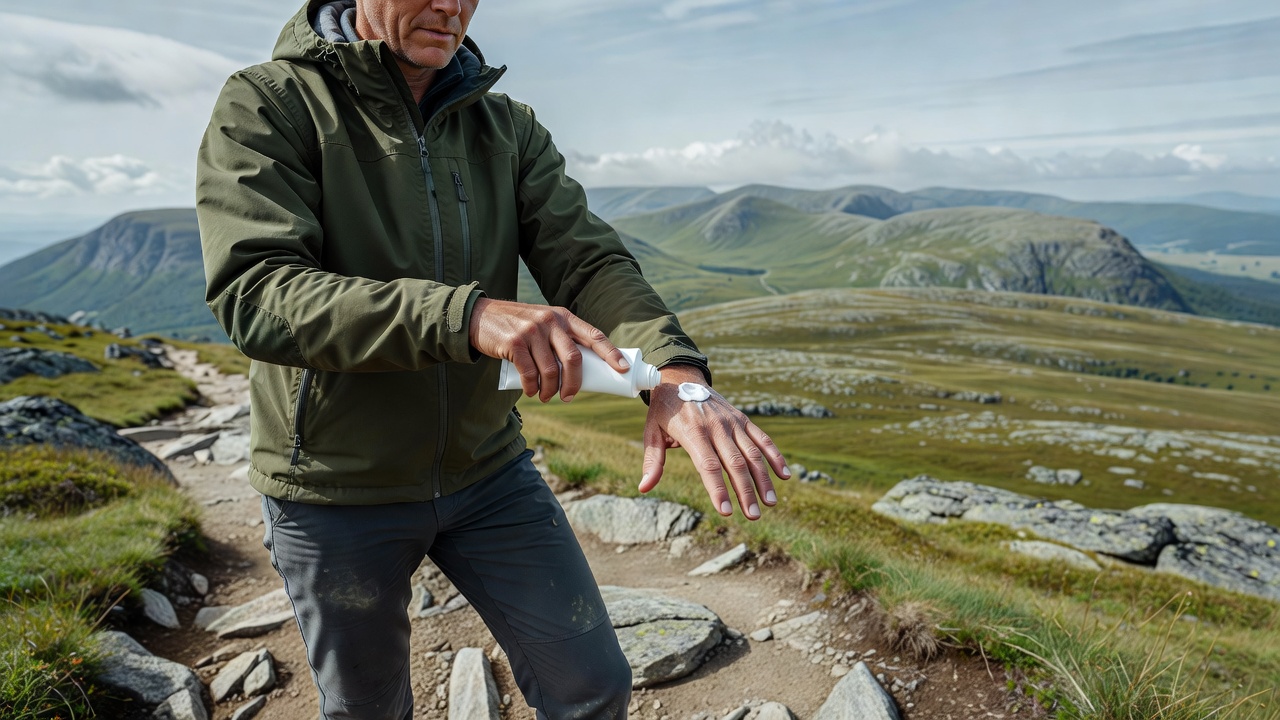
Begin with the route, not the temperature
A cold face can still receive substantial ultraviolet radiation. Wind changes how the day feels, but it does not provide a useful reading of UV intensity. Altitude, cloud conditions, latitude, time of day and reflection from snow all affect exposure. A snow-covered slope in Jotunheimen can therefore deserve a different plan from a shaded woodland walk near Oslo, even when both outings need a warm jacket.
Check the local UV forecast as well as the weather forecast. The World Health Organization recommends sun protection when the UV Index is 3 or above. That is a useful public-health threshold, not a promise that every person is safe below it. Photosensitising medicines, a history of skin cancer or specific skin conditions can change your needs. Ask a pharmacist or clinician when that applies.
Build protection in layers
Clothing is a dependable starting point because it does not need to be reapplied. Choose coverage suited to the temperature: long sleeves, a collar or neck covering, and a hat that protects more than the top of your head. A peaked cap alone leaves ears and much of the neck exposed. UV-protective sunglasses help protect eyes; snow glare makes them particularly useful.
Shade is valuable where it exists, but a high open ridge may offer none. Plan breaks around available shelter without taking unsafe detours. Sunscreen then covers skin that clothing leaves exposed. No sunscreen blocks every ray, and a high SPF is not permission to stay out longer than your route and protection allow.
Choose a formula you can use properly
For exposed outdoor activity, a broad-spectrum, water-resistant sunscreen with SPF 30 or higher is a sensible baseline consistent with American Academy of Dermatology guidance. SPF 50 or 50+ may be a practical choice for long exposed days, but coverage and reapplication still matter. Read the label rather than assuming every product has the same directions.
SPF mainly describes protection against sunburn-causing UVB under test conditions. UVA coverage matters too. In European markets, the UVA-in-a-circle symbol indicates UVA protection meeting the relevant European recommendation. It does not mean all-day protection. ISO 24444 is a laboratory method for determining SPF, not a guarantee that a thin trail application achieves the labelled result.
Use enough to form even coverage and follow the application timing on the pack; many products advise applying before going outside. Remember ears, the hairline, exposed scalp, neck and backs of hands. A lip product with SPF can cover another easily missed area. Do not rely on the small amount of SPF in makeup or a lightly applied daily moisturiser as your whole mountain plan.
Keep it usable: a sunscreen you tolerate and can spread evenly is more useful than an impressive label on a tube you avoid. Trial it during ordinary days before a longer outing.
Make reapplication part of the walk
Keep sunscreen in an accessible pocket rather than beneath every spare layer. Reapply at least every two hours outdoors and after swimming, heavy sweating or towel drying, following the product’s directions. Water-resistant does not mean waterproof. Wiping your nose, rubbing a collar or taking gloves on and off can disturb coverage in particular places.
Set a reminder if breaks tend to disappear into navigation and conversation. At a planned pause, find stable footing, remove gloves if conditions permit, and cover the missed edges rather than only the centre of your face. A small tube is useful only if it holds enough for the people and exposed hours involved. Do not ration an insufficient supply to preserve the idea of packing light.
Finish gently and notice problems
Back indoors, remove sunscreen with a gentle cleanser and lukewarm water. Avoid aggressive scrubbing, then moisturise if your skin feels dry. If skin becomes red or painful, stop further sun exposure and use cool—not icy—comfort measures. Severe blistering, fever, dizziness or feeling unwell warrants medical advice; confusion or collapse requires urgent help.
The goal is not a perfect cosmetic finish at the summit. It is a repeatable routine that fits clothing changes, snack breaks and the return journey. Write down what ran out or proved awkward, then improve that one detail before the next walk.
Before
Check UV and route exposure. Cover up and apply sunscreen as directed.
During
Use timed breaks to reapply. Check ears, lips, neck and hands.
After
Cleanse gently, moisturise and replenish your trail supply.